

What we know
What we know: NASA space telescope plunges to Earth after two decades studying cosmic explosions
Compiled Nov 4
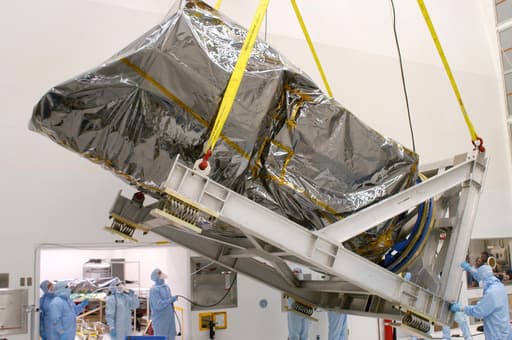
What we know
- NASA's Swift Observatory plunged to Earth on Wednesday, ending its 22-year mission studying the universe's biggest explosions.
- A rescue mission to boost Swift's orbit failed less than three months before its reentry.
- The U.S. Space Force confirmed Swift's reentry occurred near Indonesia.
- Swift launched in 2004 for an expected two-year mission but lasted 11 times longer, observing thousands of gamma ray bursts.
- NASA is exploring a similar rescue mission for the Hubble Space Telescope, whose orbit is also decaying due to solar storms.
- NASA Administrator Jared Isaacman said Hubble still has important science ahead of it.
What we don’t know yet
- It was not immediately known how much of the 1 ½-ton Swift spacecraft burned up in the atmosphere.
- Whether private companies will pursue a Hubble rescue mission, and how, is still being gauged by NASA.
Open questions
- How much debris from Swift survived reentry and where did it land?
- Will private companies respond to NASA's request for a Hubble rescue mission?
- What options will NASA choose for Hubble — orbit boost, system upgrade, or controlled reentry?
- What caused the robotic rescue craft's failure in September?
Drawn from the Associated Press report. “What we don’t know” lists only what the reporting itself flags as unresolved.