

What we know
What we know: Buckets, chickens and worms: Schools reduce cafeteria food waste through compost, shared tables
Compiled Nov 6
What we know
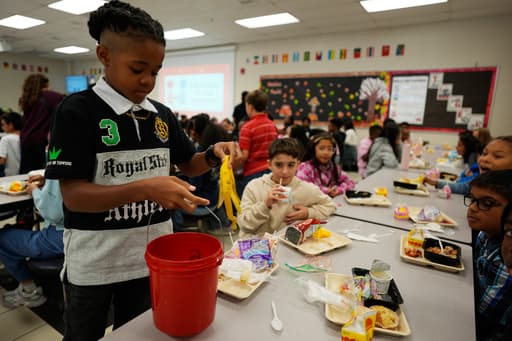
- At Lovin Elementary School in Lawrenceville, Georgia, students collect leftover lunch scraps for composting, put unopened milk on a share table, and dump salad scraps into a chicken coop.
- Public schools serve more than 30 million lunches each day, mostly through the USDA's National School Lunch Program.
- The World Wildlife Fund's Food Waste Warriors program has worked with more than 1,000 schools and says some have cut waste by as much as 70%.
- Baltimore City Public Schools, serving more than 76,000 students, has share tables, some composting, and a 33-acre learning farm.
- The USDA provides resources including guides for food waste audits, share tables, and student food choice, and recommends reassessing food buying and prep.
- School budgets and federal meal/food safety requirements can be barriers to reducing food waste, according to experts.
What we don’t know yet
- WWF acknowledged its estimate of 530,000 tons of wasted food per year was extrapolated from a small sample of 46 schools in eight states.
Open questions
- How reliable is the $1.7 billion national cost estimate given it came from a small sample of schools?
- What specific federal rules limit schools' flexibility in reducing food waste?
- How are schools funding composting programs despite tight budgets?
- Will these waste-reduction models spread to more schools nationwide?
Drawn from the Associated Press report. “What we don’t know” lists only what the reporting itself flags as unresolved.