

Card stack
Buckets, chickens and worms: Schools reduce cafeteria food waste through compost, shared tables
Compiled Nov 6
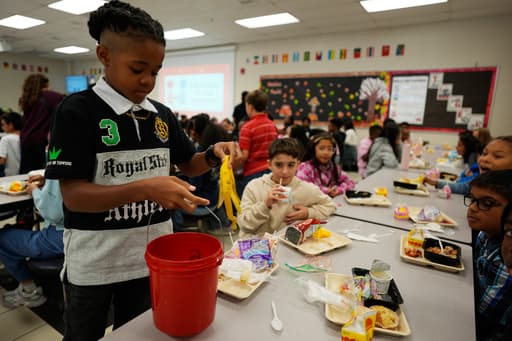
What happened
At Lovin Elementary School in Lawrenceville, Georgia, students collect leftover lunch scraps for composting, put unopened milk on a share table, and dump salad scraps into a chicken coop.
The detail
Public schools serve more than 30 million lunches each day, mostly through the USDA's National School Lunch Program.
The detail
The World Wildlife Fund's Food Waste Warriors program has worked with more than 1,000 schools and says some have cut waste by as much as 70%.
The detail
Baltimore City Public Schools, serving more than 76,000 students, has share tables, some composting, and a 33-acre learning farm.
How it unfolded
2018: Lovin Elementary conducts its first food waste audit after WWF Food Waste Warriors funding, finding 589 pounds of discarded food. · months later: Lovin's next food audit shows food waste dropped by nearly one third after introducing a share table and announcements. · fall 2021: Lovin receives a grant for on-site composting and begins collecting and weighing scraps. · 2019: WWF analyzes food waste at 46 schools in eight states to estimate nationwide school food waste costs.
By the numbers
30 million lunches served daily · 589 pounds discarded food found · 100 pounds weekly produce compost · 530,000 tons estimated annual school food waste · 33 acres learning farm size
Still unresolved
WWF acknowledged its estimate of 530,000 tons of wasted food per year was extrapolated from a small sample of 46 schools in eight states.