
The NJ Assessor's Guide to Surviving Revaluation Season
Bridges AI
AI Strategy & Engineering
Property values have surged across New Jersey since 2020 and Director's Ratios in many municipalities have cratered. The Division of Taxation has been clear: municipalities well below the common level must act, through a full revaluation or a reassessment.
What triggers a revaluation in NJ?
New Jersey has no fixed cycle. The state monitors each municipality's Director's Ratio and uniformity metrics, and when assessments drift too far from the market, the county tax board or the Division of Taxation can order a revaluation. Thresholds to watch:
- Director's Ratio below 85%: outside the safe zone. Appeal risk rises.
- COD above 15%: assessments lack uniformity. The IAAO considers this non-compliant for residential properties.
- 10+ years since the last reval: even with an acceptable ratio, accumulated inequities may be hiding beneath the surface.
What does the traditional revaluation process cost?
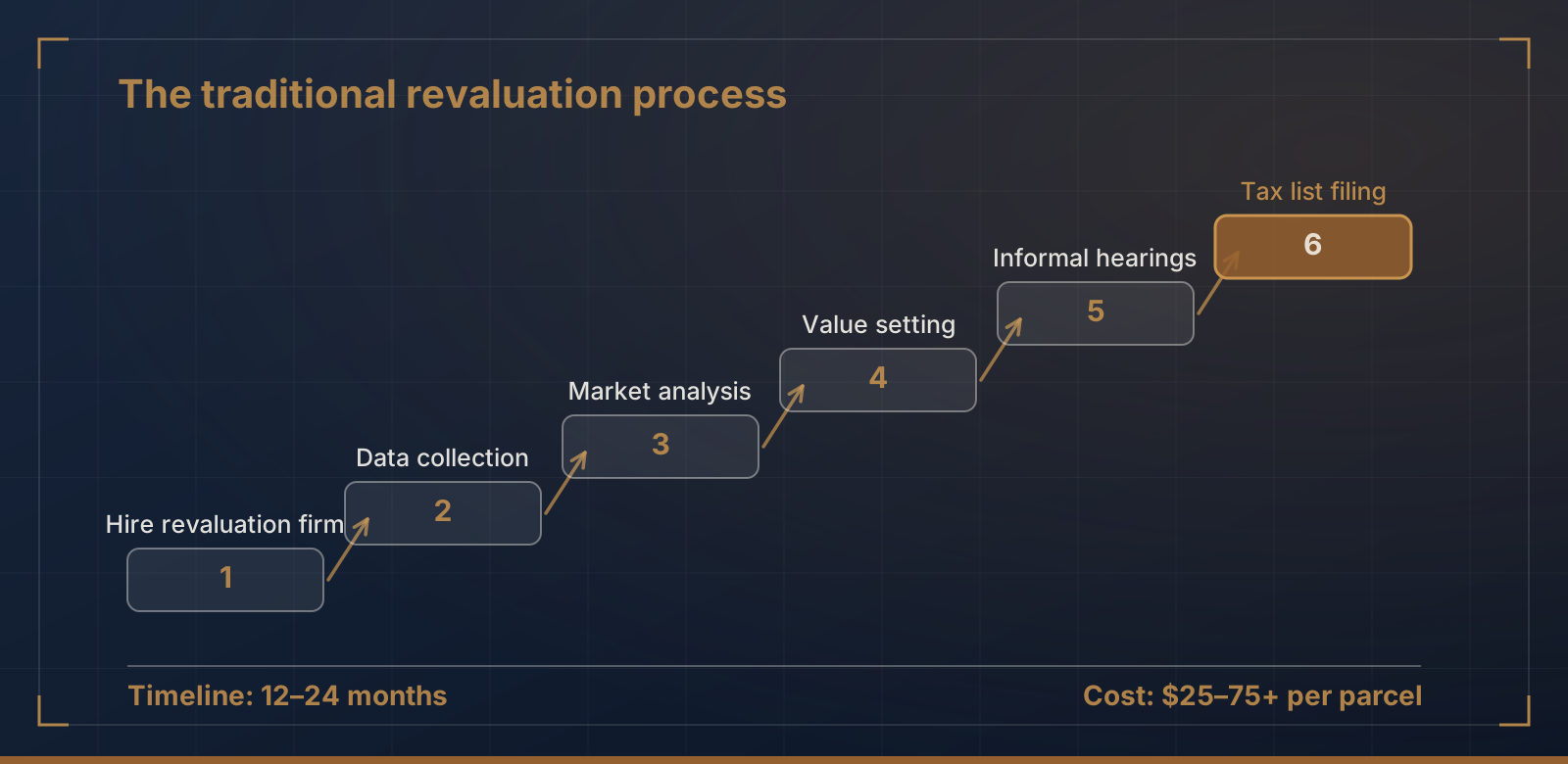
A full revaluation runs six stages:
- Hire a revaluation firm: RFP, contract negotiation, council approval
- Data collection: physical inspections of every property, or a large sample
- Market analysis: comparable sales to establish new values
- Value setting: applying models to every parcel
- Informal hearings: owners challenge their new values
- Tax list filing: updated assessments take effect
Timeline: 12-24 months. Cost: $25-75+ per parcel by municipality size. For a town of 15,000 parcels, $375,000 to over $1 million.
How is technology compressing the timeline?
Computer vision on aerial and satellite imagery reads footprints, story counts, pools, garages, and roof condition at scale, replacing thousands of inspections. Automated valuation models combine property features, market trends, and spatial patterns into IAAO-compliant valuations for a whole roll. Mobile apps with GPS tagging and photo capture replace clipboard fieldwork. And risk-based prioritization flags which parcels still need a physical inspection, so there are fewer doors to knock on.
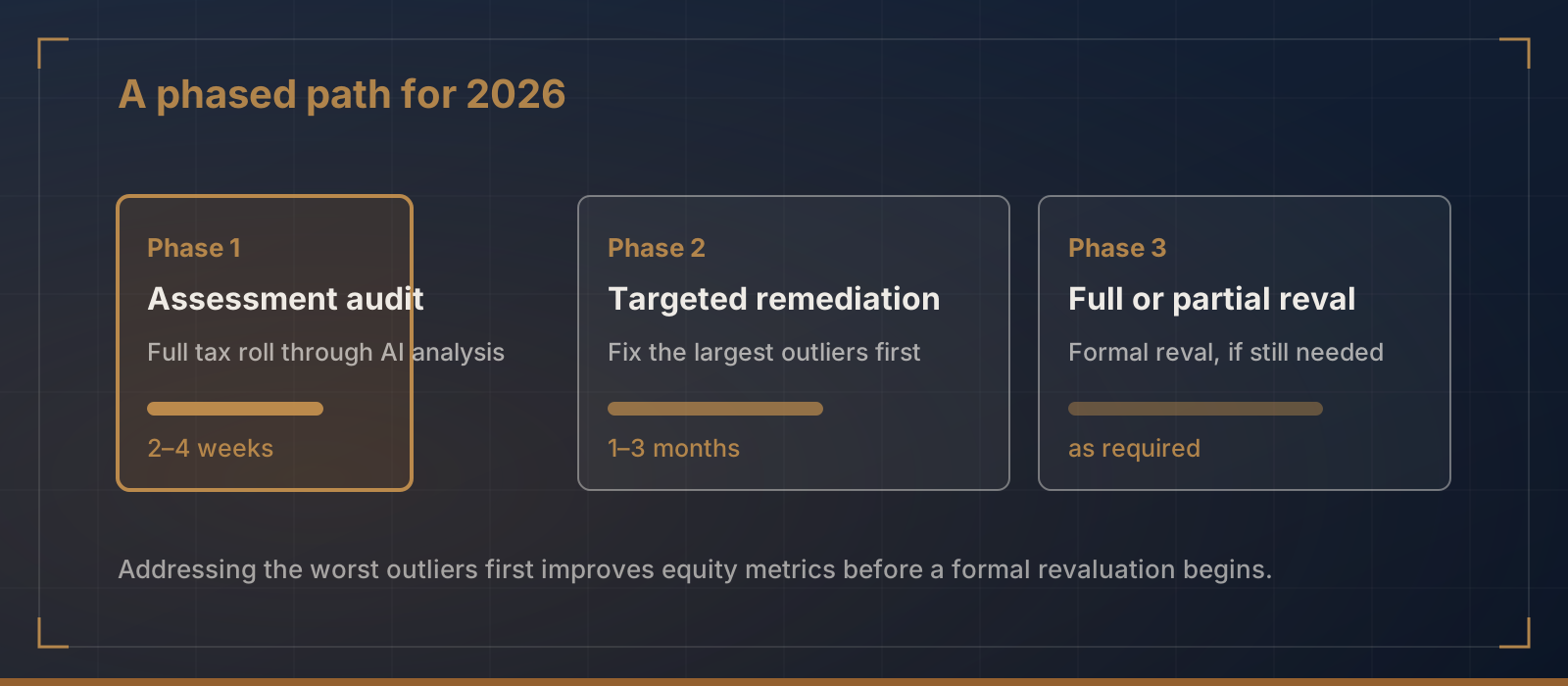
What is a practical approach for 2026?
- Phase 1: Assessment audit (2-4 weeks). Run the tax roll through an AI analysis to see which property classes are out of line and what your COD and PRD actually are.
- Phase 2: Targeted remediation (1-3 months). Properties below 50% or above 150% of the common level are both appeal risks and equity concerns; revaluing those alone can move your metrics.
- Phase 3: Full or partial revaluation, if still needed. With the worst outliers addressed, a formal reval is less disruptive, and technology-assisted approaches cut the timeline and per-parcel cost.
How does this help appeal defense?
Appeal preparedness arrives before the revaluation does. Valuations built on current market data and IAAO-compliant method defend far better in front of a tax court judge than a decade-old assessment plus trending. Which is why the first step is not hiring a revaluation firm; it is auditing your tax roll.
Bridges AI provides AI-powered assessment intelligence for New Jersey municipalities. We help assessors understand their equity position and prepare for revaluation with data-driven tools. Schedule a demo to see your municipality's data.
Related posts
How Satellite Imagery Is Transforming NJ Property Assessment
Computer vision and aerial imagery are giving NJ assessors new tools to detect property changes, verify conditions, and maintain assessment accuracy without knocking on every door.
Property Assessment2026 NJ Appeal Season: The Assessor's Preparation Checklist
Appeal filing deadlines are approaching. Here's a practical checklist for NJ tax assessors to prepare defensible valuations and minimize revenue loss.
Property AssessmentCOD, PRD, and Uniformity: What Every NJ Assessor Needs to Know
IAAO uniformity metrics are increasingly used to evaluate NJ assessments. Here's what COD and PRD mean for your municipality, and how to improve them.