
2026 NJ Appeal Season: The Assessor's Preparation Checklist
Bridges AI
AI Strategy & Engineering
Use this checklist to tighten your defenses before the filing deadline.
What should you do 30 days before the filing deadline?
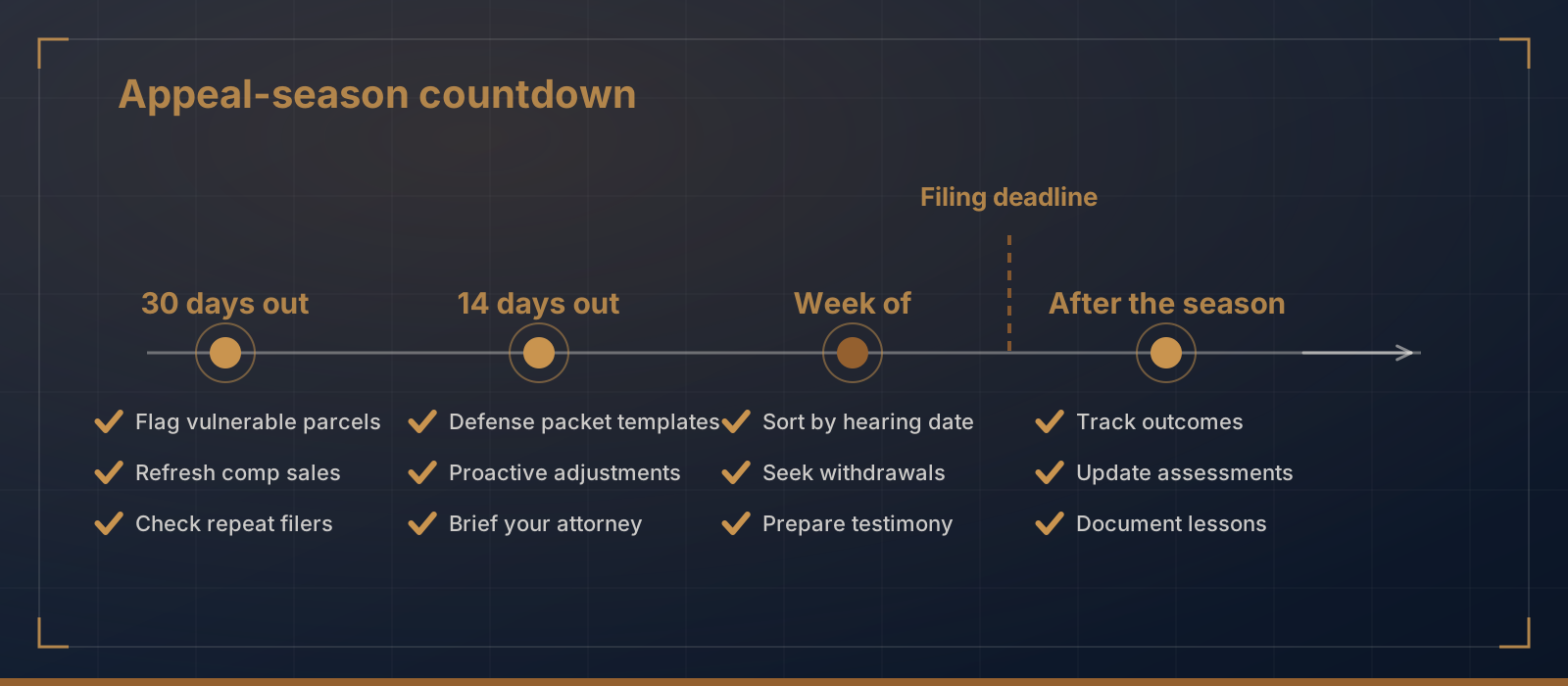
Review your most vulnerable parcels: assessed value well above recent comparable sales, classes untouched since the last revaluation, deterioration never reflected in the assessment, commercial properties with declining rental income.
Update your comparable sales database, organized by property class, neighborhood or tax map section, date of sale (prioritize the last 12 months), and adjustments already computed.
Check your repeat filers. Many properties that appealed last year will file again, especially if they won a reduction, and last year's defense file saves hours.
What about 14 days out?
Prepare standardized defense packets by property class: valuation method, comparable sales with adjustments, market trend data, inspection notes.
Identify properties to adjust proactively. If a parcel is genuinely over-assessed against current market data, correcting it beats losing at the board and shows good faith.
Brief your attorney. Outside counsel on tax court cases needs current market data and your strongest defenses.
The week of
Organize by hearing date and confirm each file is complete beforehand.
Check for withdrawals. Some appellants file speculatively; a call walking the attorney through your comparable data sometimes produces a withdrawal.
Prepare your testimony. Explain your valuation method in plain language. The board wants to hear thorough professional work, not that you pulled the property record card.
What should you do after the season?
Track outcomes by property class, claim type, and appeal attorney, so next year's defenses start from data.
Update assessments. Reflect granted reductions immediately, and check whether the board's reasoning points to broader issues in particular neighborhoods or classes.
Document lessons. Which appeals were hardest to defend, and where did your comparable data fall short? Let that shape assessment maintenance all year.
Where does technology help?
- Comparable selection in seconds rather than hours per parcel
- Every sale analyzed, not just the ones you remember
- Defensible methodology documentation generated automatically
- Predictive risk scoring that prioritizes preparation time
Assessors who win more appeals aren't better at the hearing. They're better prepared before the filing deadline.
Bridges AI helps NJ tax assessors prepare for appeal season with AI-powered comp analysis and risk scoring. See how it works.
Related posts
How Satellite Imagery Is Transforming NJ Property Assessment
Computer vision and aerial imagery are giving NJ assessors new tools to detect property changes, verify conditions, and maintain assessment accuracy without knocking on every door.
Property AssessmentCOD, PRD, and Uniformity: What Every NJ Assessor Needs to Know
IAAO uniformity metrics are increasingly used to evaluate NJ assessments. Here's what COD and PRD mean for your municipality, and how to improve them.
Property AssessmentWhy Your Director's Ratio Should Worry You (And What AI Can Do About It)
New Jersey municipalities with Director's Ratios below 85% face mounting appeal risk. Here's how AI-powered assessment intelligence helps assessors stay ahead.