
AI in Universities, Why and How
Bridges AI Team
AI Strategy & Engineering
TL;DR — Key Takeaways
- Students expect flexible, digital-first learning, but producing high-quality digital lecture content is time-consuming for faculty.
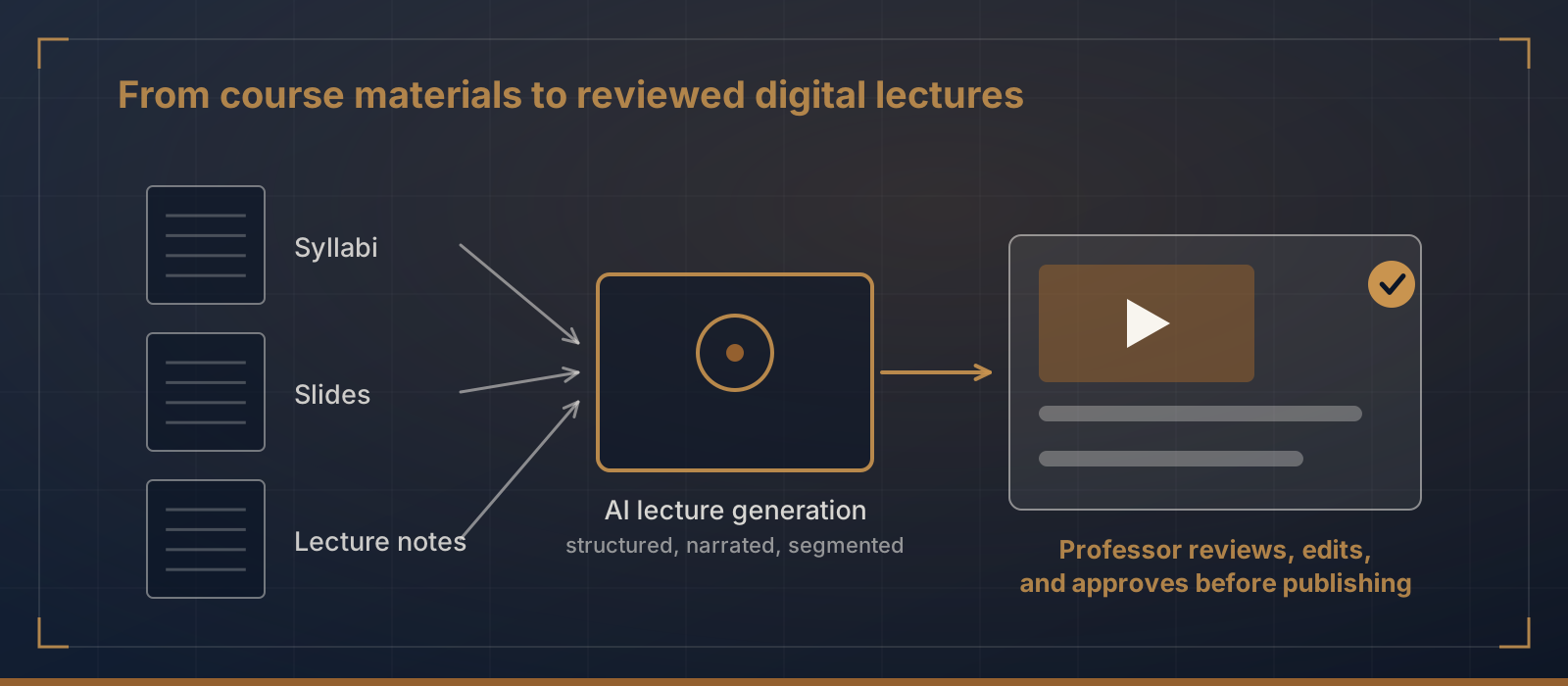
- AI platforms can convert existing course materials (syllabi, slides, notes) into structured, narrated lectures that professors review and approve.
- AI-generated transcripts, subtitles, and segmented lessons improve accessibility for students with different learning needs.
- AI helps universities scale online and hybrid programs without dramatically increasing faculty workload.
- AI should augment professors, not replace them, and responsible implementation requires attention to privacy, integrity, and governance.
The Digital Expectations of Modern Students
Universities face pressure to deliver high-quality instruction while managing growing enrollment and expanding online programs. Many students balance coursework with jobs or internships, so flexible learning matters more than ever. Online and hybrid models have grown quickly, but producing digital lecture content still takes faculty a great deal of time. AI helps professors turn lecture notes, slides, and readings into resources students review at their own pace.
AI Can Improve Faculty Efficiency
Recording and editing lectures, structuring modules, and preparing accessible content can take hours per lesson. AI systems automate much of that while professors keep control of the content. Platforms such as Lectura integrate directly with a university's learning management system, analyze syllabi, slides, and lecture notes, and produce narrated lecture content that professors review and edit before publishing.
Research from the McKinsey Global Institute estimates that, accelerated by generative AI, activities accounting for up to 30% of hours currently worked across the US economy could be automated by 2030. In the academic context, that means faculty time moving from production work toward teaching, mentoring, and research.
AI Improves Accessibility in Education
AI lecture systems produce transcripts, subtitles, and segmented lessons. Students who learn best by reading can follow transcripts; others gain from pausing or replaying specific sections. Education researchers have noted that AI-driven tools can improve accessibility and personalize learning for students with different backgrounds and learning styles.
AI Supports the Expansion of Online and Hybrid Programs
Online degrees, executive education, and international programs all depend on digital course materials, and scaling them usually means faculty recording large volumes of lecture content. That is the real barrier to growth. By converting existing materials into structured lectures automatically, AI platforms let universities produce digital content without a matching jump in faculty workload.
AI Enables Better Knowledge Organization
Universities produce enormous amounts of content every year: lecture recordings, course materials, academic papers, research outputs. AI systems break lessons into topic-based segments, pull out learning objectives, and link materials to related content, making institutional knowledge easier to search.
AI Should Augment, Not Replace, Professors
Some educators worry technology could shrink the role of faculty. Professors still provide the intellectual leadership and academic expertise that define the university experience, and platforms like Lectura reflect that: faculty review, edit, and approve every AI-generated lecture before students see it. AI handles production; professors stay responsible for the content.
Responsible AI Implementation Is Essential
Data privacy, academic integrity, and transparency all deserve attention. Universities should confirm that AI systems comply with privacy regulations and keep control over institutional data, which is why many are exploring private AI infrastructure or secure LMS integrations. Universities that get that governance right will be better equipped to support digital learning, improve accessibility, and scale their programs.
References
- McKinsey Global Institute. (2023). Generative AI and the Future of Work in America.
- Holmes, W., Bialik, M., & Fadel, C. (2019). Artificial Intelligence in Education: Promises and Implications for Teaching and Learning. Center for Curriculum Redesign.
- Luckin, R., Holmes, W., Griffiths, M., & Forcier, L. (2016). Intelligence Unleashed: An Argument for AI in Education. Pearson Education.